
Is this really the best we can do?
FFS Moment
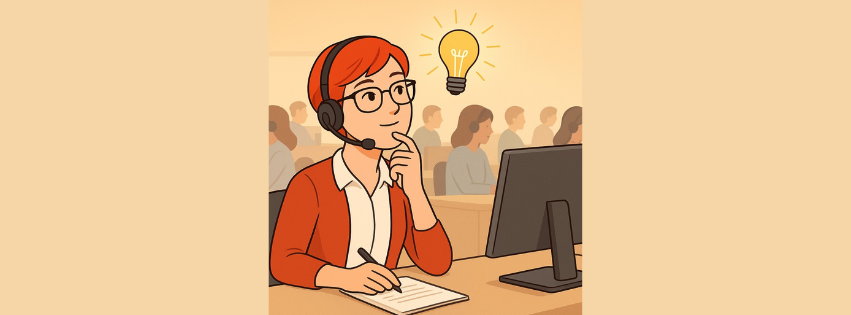
I remember the exact moment I thought, “FFS, this cannot be the best we can do.”
I was in a call centre in Newcastle, leading a team handling tech support for clients like Apple and Sony. We had scripts for everything. Word for word. If a customer dared to have a problem that didn’t fit the script, my team had two choices: frustrate the customer or break the rules.
I watched smart, caring people having to choose between doing their job “right” and doing the right thing. Their performance dropped. Their stress rose. They left in droves. Customers were unhappy. And all of that was treated as an individual problem: “coach them more, monitor them more.”
That was the moment I realised: it wasn’t them. It was the system.
So we started breaking the rules. Quietly. My boss didn’t know, the client didn’t know. We gave people more room to use their judgement. We made the team profitable and proved the script writers wrong.
People vs System
Fast forward a few years. I’m working with startups instead of call centres, but the pattern is the same. Founders want “A‑players.” They say “People first.” They talk about culture and purpose. And then they try to scale on a people system built by accident: vague roles, 9–9–5 just to get by, no real feedback, unspoken rules.
The result is the same forced choice I saw in that call centre: follow the unofficial script, or do what you know is right for the customer, the product, and your team.
People are only your greatest asset if you have the operating system that lets them be at their best.
Not flexible working, beanbags and free snacks. Not your perks. The actual way decisions get made, information moves, expectations are set, and conflicts are addressed.
When that system treats people like adults: clear context, real authority, honest feedback then your team of A‑players can actually play like a team. When it doesn’t, even brilliant people become “problems” you burn through.
The Difference
In any company, the difference is simple questions like:
Who decides what?
How do we handle it when someone struggles?
How will we disagree without breaking trust?
Different answers to those questions create wildly different outcomes.
And here’s the implication most people miss:
You are always building a People Operating System.
Silence is a setting. Avoidance is a setting. “Ask me first” is a setting.
If you don’t build it on purpose, your worst habits will do it for you.
The question is not, “Do we care about people?” Every founder will say yes.
The real question is, “Do we work together in a way where the right thing for our people is also the smart thing for the business?”
Because the day you make that shift, your people stop being a risk to manage and start being the reason you win.
Never give your team the choice between the script and their judgement.